


Last updated: November 17, 2025
Itinerary
What follows is a general flow of events. Expect the unexpected and prepare to be flexible.
June 15
Meet in Anchorage at 5 pm for a pre-trip meeting to answer your questions, confirm you have the right clothing, and generally ensure that everyone is ready for the trip.
June 16
Meet at the airport at 7 am to check-in for our flight to Cold Bay. The 650-mile flight down the Alaska Peninsula gives a startling perspective of how remote and rugged the region is as we follow the string of volcanoes and frothy bays south and west. As we fly on and on the Alaska Peninsula narrows and the Pacific and Bering Seas grow ever closer. Welcome to the Aleutians!
Once we are in Cold Bay with our luggage we will catch a ride to the harbor and board the boat. We have time to settle in before the crew provides a safety briefing and lunch. Then we head out onto the North Pacific. The adventure begins in earnest.
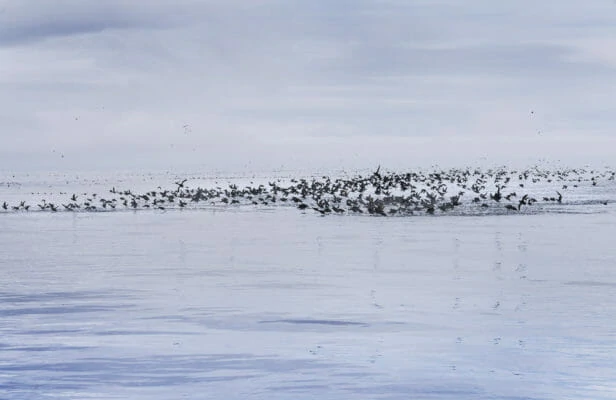
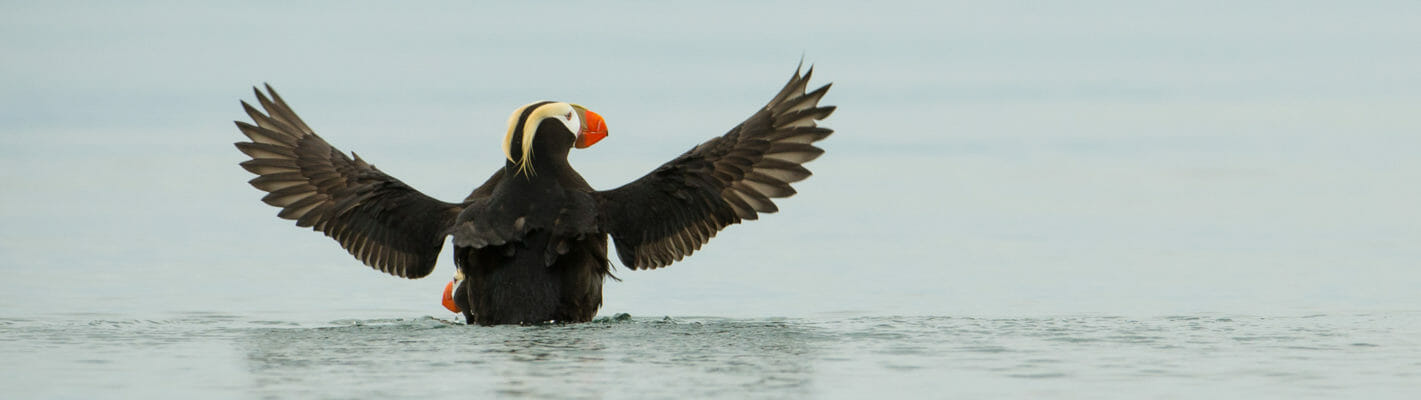
Not far from Cold Bay there are several enormous seabird colonies that we hope to visit. These are some of the largest colonies in Alaska and host more than a half a million birds. Storm Petrels (Leach’s and Forktail), Auklets (Cassin’s), plus hundreds of thousands of both Tufted and Horned Puffins nest on rocky islands and fill the sky with their sight, scent, and noise as they establish their colonies at the start of breeding season.
June 17
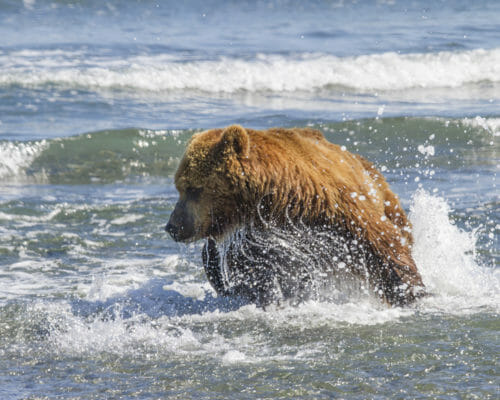
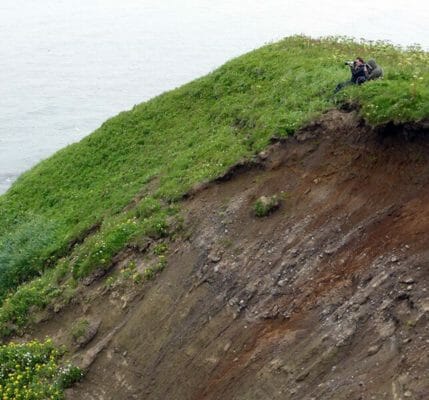
As we enter the tidal rips of Isanotski Strait, the tip of the Alaska Peninsula rises to starboard and 8,000 ft volcanoes of Unimak Island (the first of the Aleutians) tower above the beach on the left. There is much to see in the protected waters near the 50 person community of False Pass. The area boasts some excellent hiking in the tundra cloaked hills providing access to the high country with views of both the Pacific and the Bering Sea. We are likely to see enormous coastal brown bears here too, though not further west.
We hope to anchor in Hot Springs Bay and can spend the evening hiking to the springs for a soak or watching sea otters feed in the kelp beds close to shore.
June 18
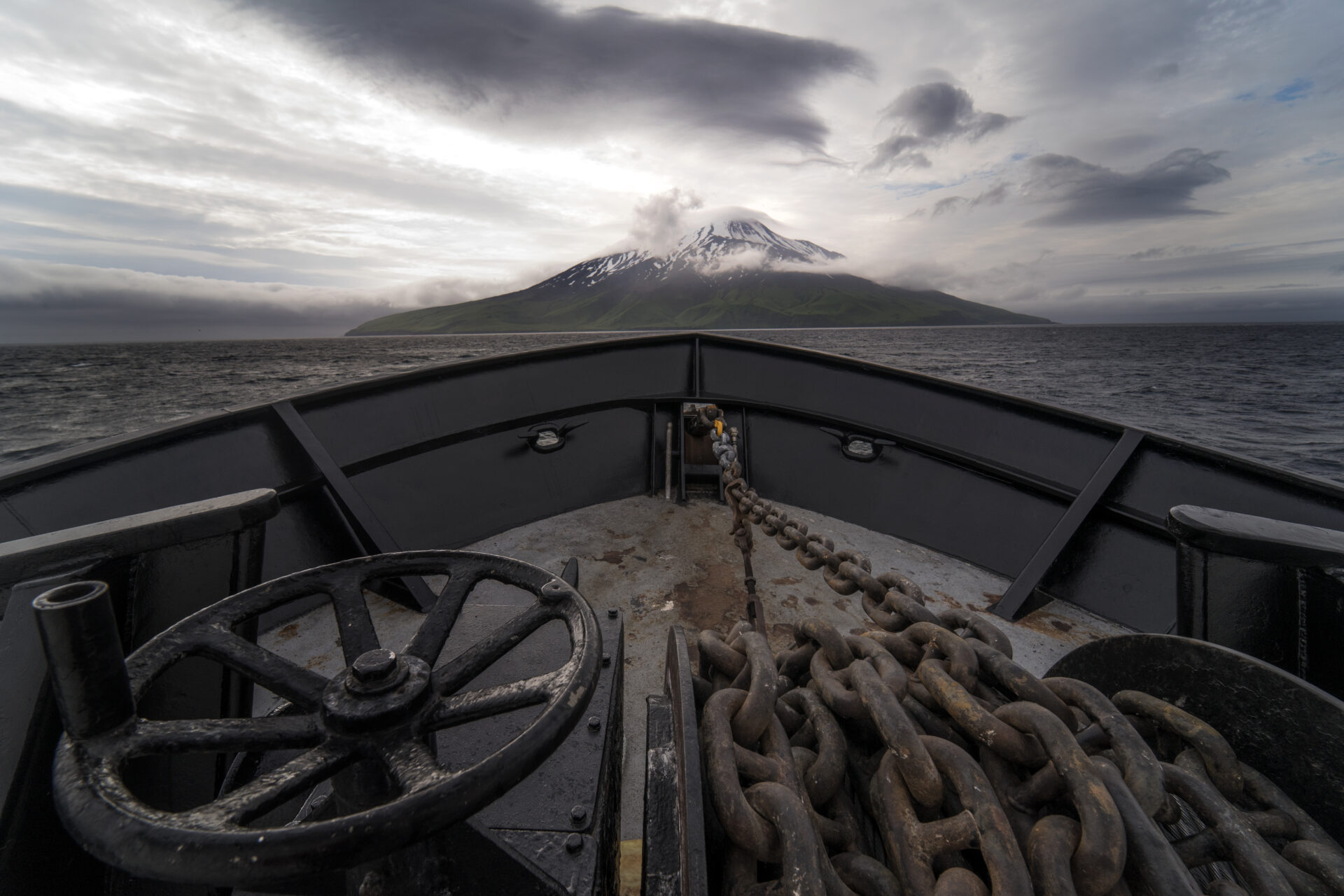
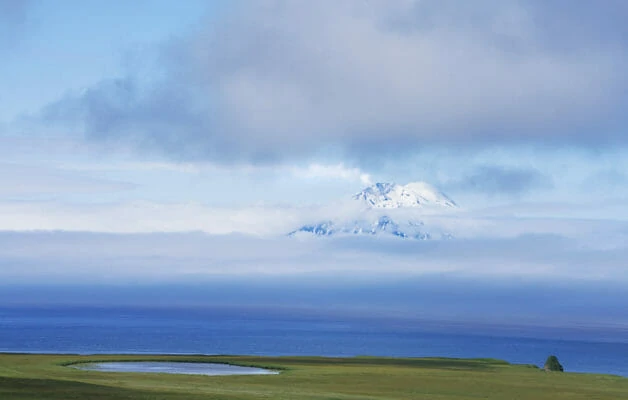
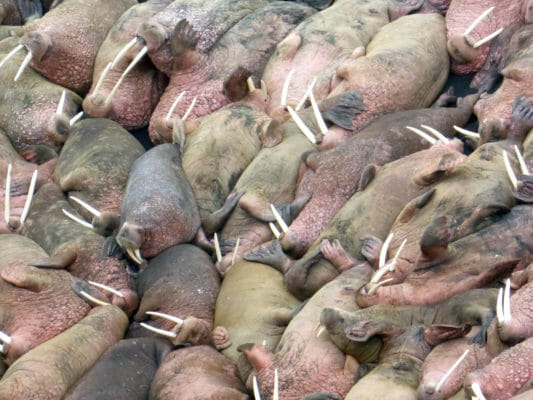
When the tide is right, we can scoot through “False Pass” which is shallow but navigable, and enter the Bering Sea on the north side of the Aleutians. The beaches are broad and sandy. Heading west along the shores of Unimak Island the snowy peaks of the volcanoes wrapped in storm clouds and often venting gas make an impressive backdrop. A sporty landing with the zodiac takes us to an enormous beach in a shallow bay. Here we often find walrus resting on the beach, and sometimes many hundred walrus congregate here.
There are also several historical sites where we can ponder the ingenuity of Unangan ancestors who made earthen homes on this beach and thrived on this windy and wildlife rich island.
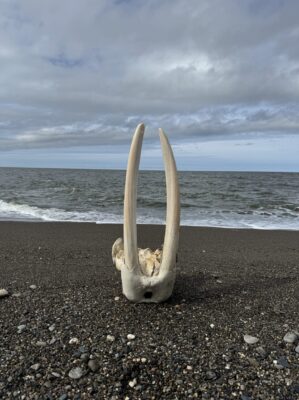
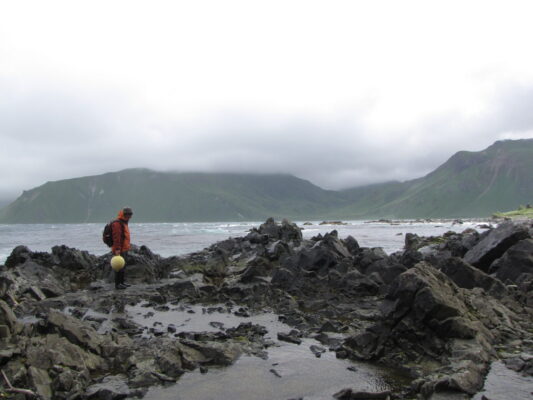
Beach combing on the Bering Sea Coast is legend! Glass fishing floats find their way from Asia to these storm battered beaches. Whale and walrus bones mix with driftwood from far and wide. We never know what we might find on these lonely shores. But the northern shore of Unimak is a breathtaking and beautiful place full of wildlife and wonder.
June 19
The relatively warm Pacific meets the cold Bering Sea in great boils and whirlpools at Unimak Pass, the first large strait in the Aleutian chain, and by no coincidence also the most densely populated part of the Aleutians before colonization.
Where the waters mix, life abounds! The majority of Eastern Pacific Gray Whales migrate north through the pass each spring keeping young calves close by to protect them from Orcas looking for a meal. Though the peak passage for Grays is a few weeks earlier we hope to see lots of whales still moving through.
In addition to the various cetaceans, we are likely to encounter Stellar’s sea lions, sea otters and harbor seals beneath the cormorant colonies where the surf perpetually beats on the cliffs. Birds also take advantage of these rich waters with nearly a half million puffins nesting in the area along with sizable petrel colonies.
We can do some shorter walks here but much of what we will want to see is best observed from the ship or the zodiac this day. This promises to be a day filled with wildlife (and the smell of guano)!
June 20
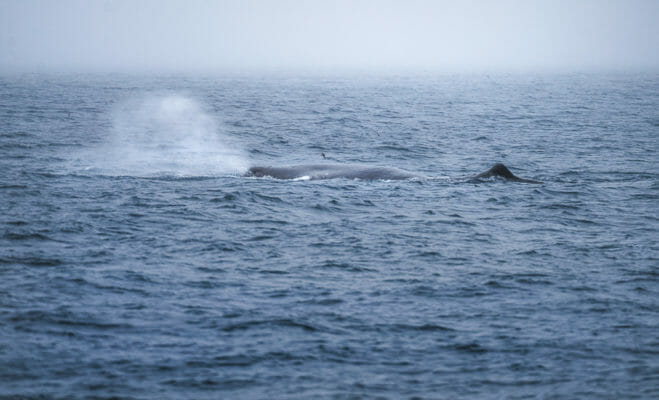
From Unimak Pass we will detour north of Akutan Island to an upwelling famous as a rich feeding grounds where we hope to encounter lots of whales. Gray, sperm, humpback, minke, and fin whales have all been seen in this area and we hope to spend the day watching and photographing them feeding in the cold gray waters of the Bering Sea.
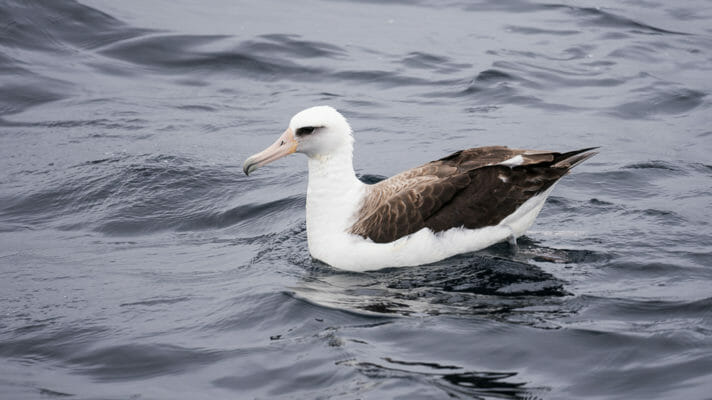
Amongst the whales we are sure to see sea birds and can hope for albatross (black-footed, Laysan and possibly even short-tailed), whiskered auklets, northern fulmars, big numbers of shearwaters, and a dizzying array of other alcids big and small.
June 21
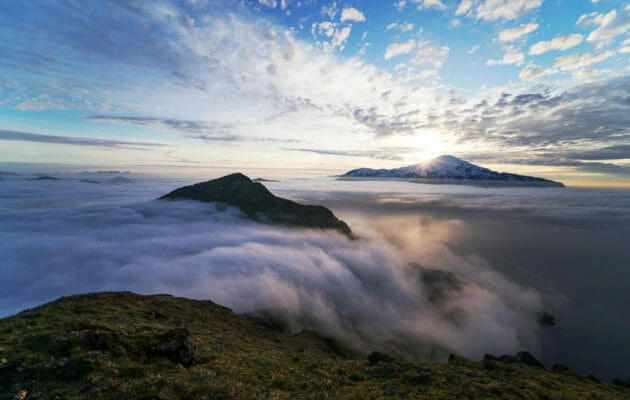
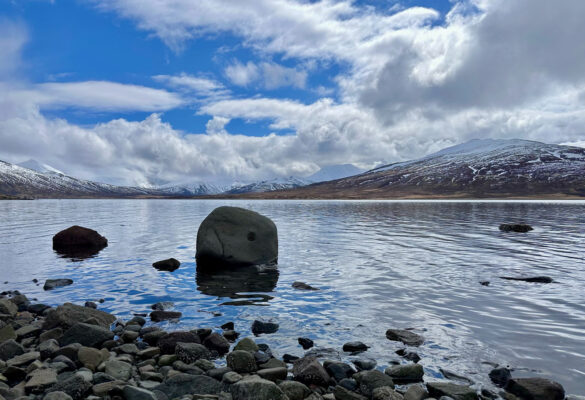
The sheltered and often foggy waters of Unalaska Island seem a world away from the steely expanse of the Bering Sea. Deep green bays and tranquil waters beckon us to explore the many deep inlets glaciers have carved in the island. Ringed by icy summits Makushin Bay is a magnificent place to explore.
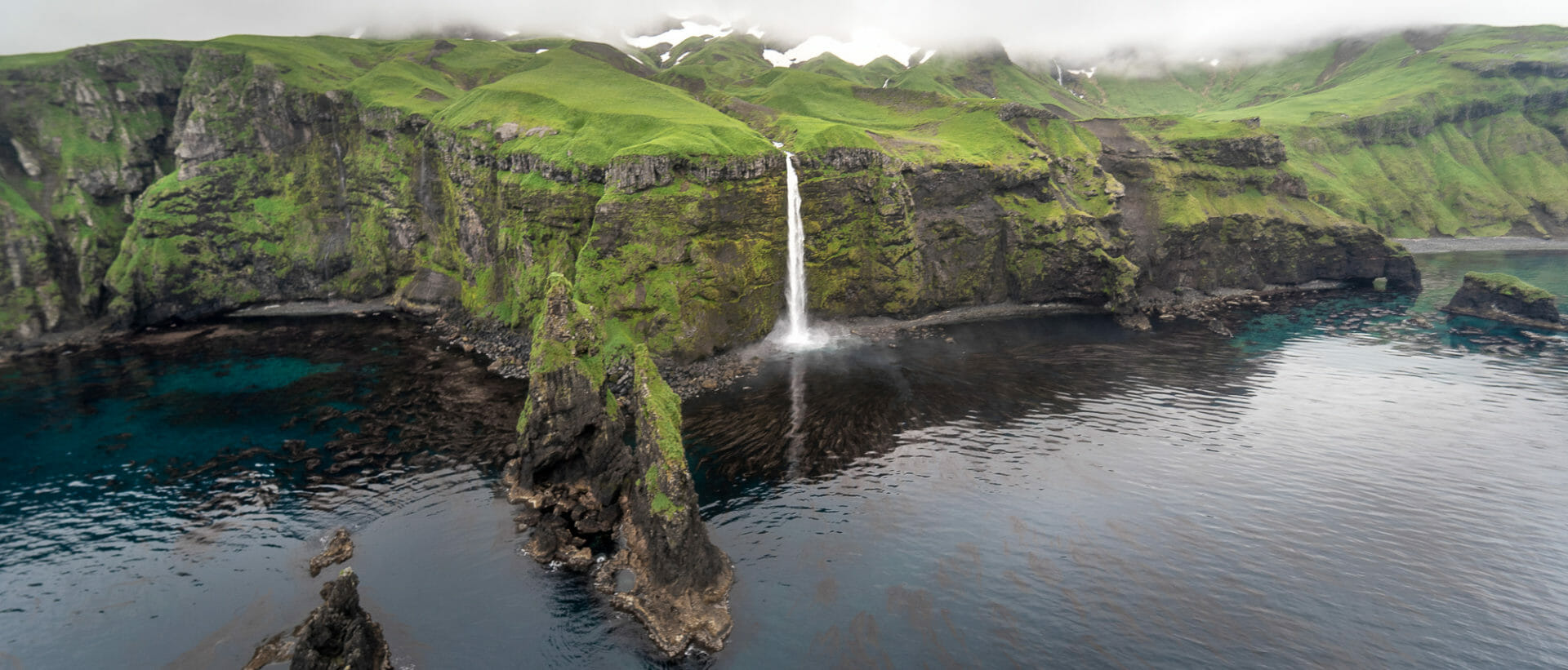
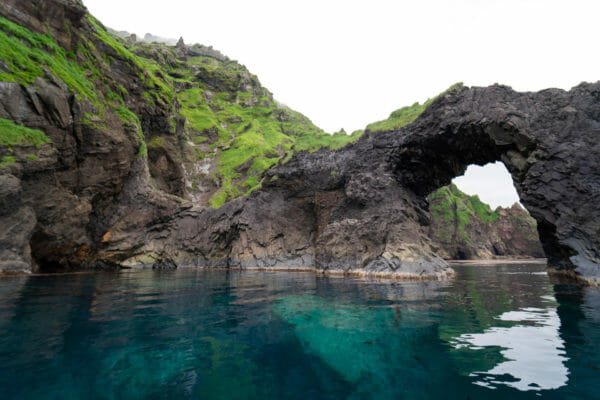
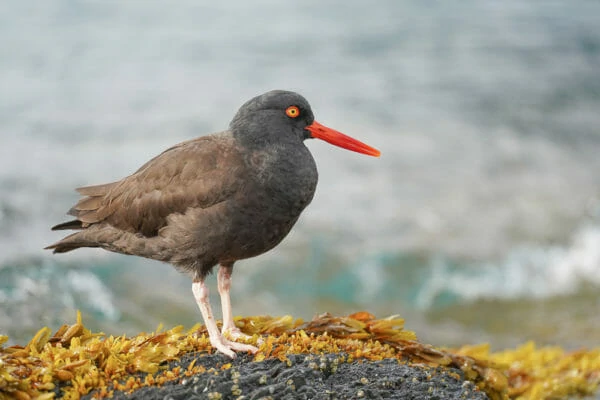
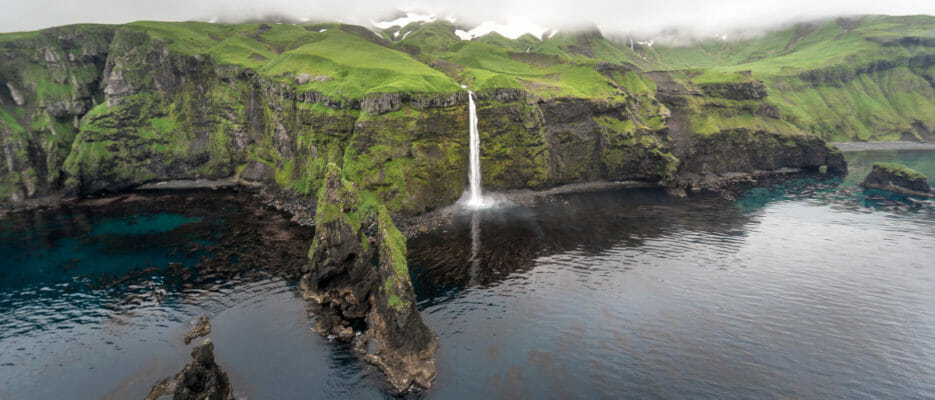
Waterfalls plunge into the sea and oyster catchers cry from the numerous kelp covered reefs. These waters sustained Unangan hunters for millennia, providing shellfish, cod, salmon, pinnipeds, and cetaceans for untold generations. On the volcano above the bay there are rumors of burial caves where hot dry air preserved ancestors for eons, We definitely won’t look for the caves nor will be disturb any historical or archeological sites.
Makushin Village was a thriving community 50 years ago but has now gone quiet. The spring tundra allows for long hikes inland and long volcanic ridges allow us to hike far into the island. In the grass along the beach, edible greens will be sprouting. Fishing is excellent in the bay and we can catch and gather a unique and delicious banquet from these protected waters.
June 22
During World War II Japanese forces occupied several islands in the western Aleutians. The effort to expel them from the Aleutians left a mark on the region. Unalaska and Umnak Islands are no exception.
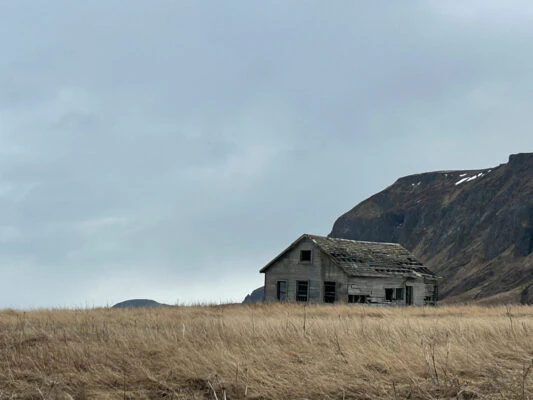
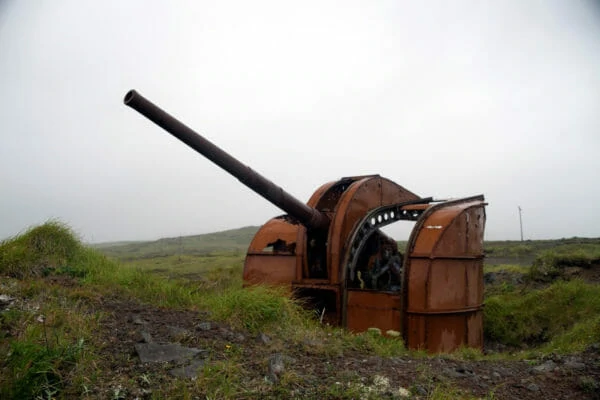
Fort Glenn was a secret airfield during the war. Hidden by a nearly perpetual cloak of fog, this hastily constructed base allowed US forces to fly west and retake the western Aleutians after Japanese occupation. The National Park Service calls Fort Glen the most comprehensive and intact World War II base in the Aleutian Islands. The wind and weather has taken a toll on the buildings, and much of the infrastructure is gone; but the visit is interesting nonetheless.
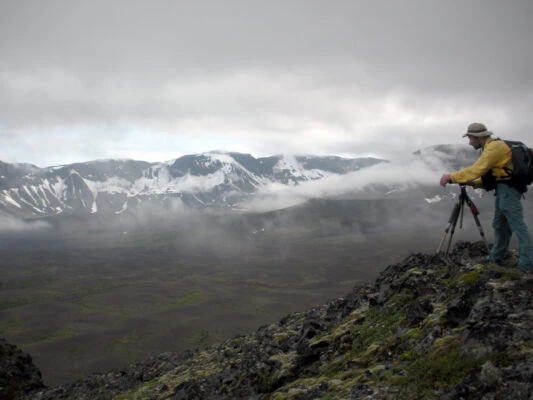
If rusting war history is not your thing, there is also great hiking on the tundra and along the gravel roads here. Tulik and Okmok volcanoes loom directly above the area. And if there wasn’t enough to see already, there is a cattle ranch of sorts which uses the crumbing base as a headquarters.
June 23
Geyser Bight on Umnak Island is the most geothermally active place in Alaska and one of very few places in the world with active geysers.
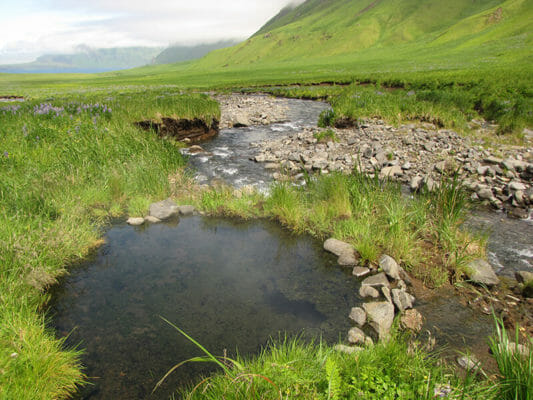
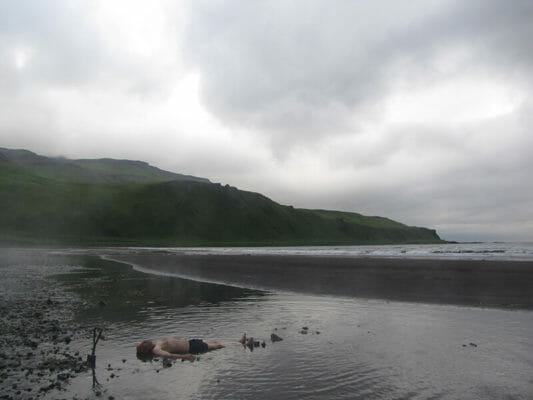
The hot springs and geysers heated by nearby volcanic activity are scattered throughout the area. There are warm pools to lounge in, with a bubbling creek in which to cool off. Around each bend of the creek is a new wonder. When the tide recedes, there are even hot springs on the beach so you can relax in a warm bath while dipping your toes in the Bering Sea.
Once relaxed and refreshed we can hike inland in search of fumaroles and geysers. Some of the geysers are capable of throwing rocks meters into the air! It is a significant hike to the top of the valley where many of the geothermal features burble and boil, but there are lots of fumaroles, hot springs, and hot pots within a couple miles of the beach too. And of course, there is great beach combing, ridge walking and wandering in the area too.
June 24
There ought to be time for a quick soak in the hot springs before sailing northeast into the Bering Sea. Destination Bogoslof Island.
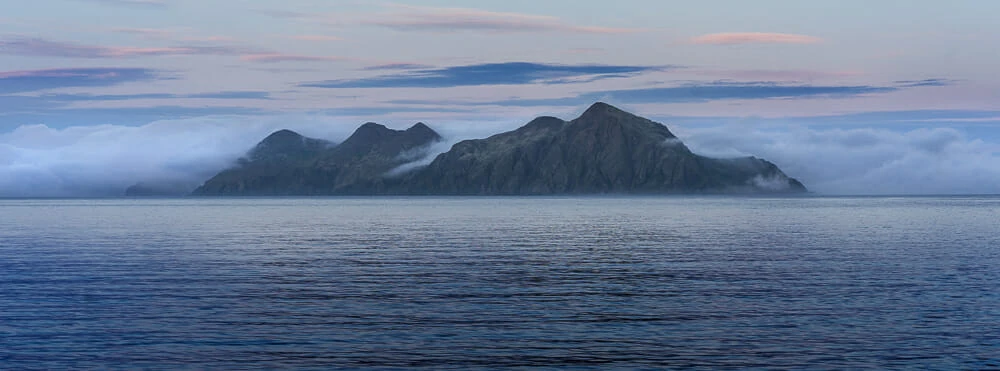
An enormous shield volcano whose smoking peak forms a small Island 20 miles north of the main Aleutian Chain is just 150 years old and has a recent history of cataclysmic eruptions. It is also an extremely important Fur Seal colony hosting tens of thousands of seals each year.
We won’t have permits to land here, but we can observe and photograph the wildlife with a smoking volcano in the background from Pacific Shadow and or the tenders for as long as we like.
June 25
Arrive in America’s top fishing port in the morning. Once in Dutch Harbor your trip with Arctic Wild concludes.
There is an evening flight to Anchorage if you need to get back to the busy world. But we would encourage you to stay in Dutch Harbor/ Unalaska and explore on your own for a day or more. In addition to the Museum of the Aleutians and the Orthodox Church in Unalaska, there is a lot to see and do here.
Flights back to Anchorage are not included in the trip price nor is any lodging in Dutch Harbor.